
Cervical Isometric Exercises: A Comprehensive Guide

Discover effective neck strengthening through manual isometric exercises, readily available as a PDF resource. These exercises build strength without movement, aiding conditions like cervical spondylosis.
Understanding Cervical Spine Health
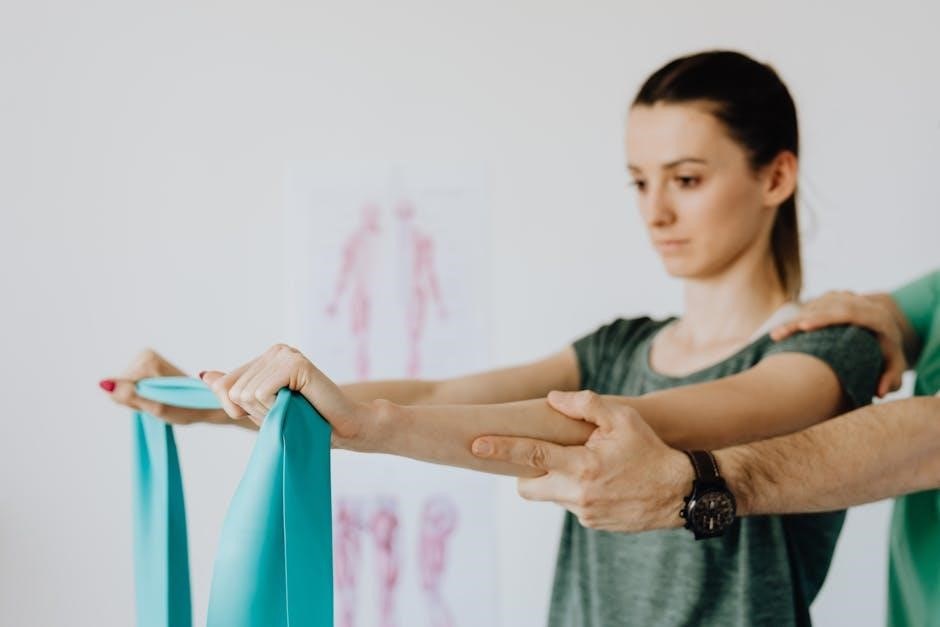
Maintaining optimal cervical spine health is crucial for overall well-being, impacting everything from posture to neurological function. The cervical spine, comprising seven vertebrae, supports the head and enables a wide range of motion. Degenerative conditions like cervical spondylosis – osteoarthritis of the spine – can significantly impair this function, causing pain and stiffness.
Understanding the interplay between muscles, ligaments, and vertebrae is key to preventative care and rehabilitation. Weak neck muscles contribute to instability and exacerbate conditions like cervical spondylosis. Isometric exercises, often detailed in a PDF guide, offer a safe and effective method to strengthen these muscles without placing undue stress on the spine.
These exercises focus on contracting neck muscles against resistance, improving strength and endurance. A comprehensive approach to cervical spine health also includes maintaining good posture, ergonomic adjustments, and regular physical activity. Early intervention and consistent exercise, as outlined in available resources, can significantly improve quality of life and prevent further deterioration.
What are Isometric Exercises?
Isometric exercises are a form of muscle contraction where the muscle length remains constant, despite the effort. Unlike concentric (muscle shortening) or eccentric (muscle lengthening) contractions, isometrics involve engaging the muscle without visible movement at the joint. This makes them particularly suitable for rehabilitation and individuals with joint pain or instability.
In the context of cervical health, isometric exercises involve contracting the neck muscles – flexion, extension, and lateral flexion – against an immovable resistance, such as your own hand or a stable object. Many resources, including detailed PDF guides, illustrate proper form and technique. The goal isn’t to move the head, but to actively engage and strengthen the targeted muscles.
These exercises are beneficial because they build strength without stressing the cervical spine. They can improve muscle endurance, stability, and control. A key advantage is their accessibility; they require no equipment and can be performed virtually anywhere. Properly executed isometric exercises, as demonstrated in instructional materials, are a cornerstone of many cervical rehabilitation programs.
Benefits of Isometric Exercises for the Neck
Isometric neck exercises offer a multitude of benefits, particularly for individuals experiencing neck pain or recovering from cervical spine issues. A key advantage is improved neck stability, achieved by strengthening the surrounding muscles without placing undue stress on the joints. Many PDF resources detail how these exercises enhance postural control, reducing strain and discomfort.
These exercises are effective in managing conditions like cervical spondylosis, where degenerative changes affect the spine. By strengthening the neck muscles, isometrics can help support the spine and alleviate pain. Furthermore, they can improve range of motion over time, even without active movement during the exercise itself.
Accessibility is another significant benefit; they require no special equipment and can be performed anywhere. Detailed PDF guides often provide step-by-step instructions, making them suitable for self-management under the guidance of a healthcare professional. Ultimately, consistent isometric training contributes to a stronger, more resilient neck, promoting long-term cervical health.
Cervical Spondylosis and Isometric Exercises
Cervical spondylosis, or osteoarthritis of the spine, often benefits significantly from a targeted exercise program, with isometric exercises playing a crucial role. These exercises are particularly valuable as they strengthen neck muscles without stressing the affected joints, a key consideration for those experiencing pain and stiffness. Many PDF guides specifically address protocols for this condition.

Degenerative changes in the cervical spine can lead to axial neck pain, and isometric strengthening helps counteract muscle weakness that exacerbates these symptoms. By engaging muscles in a static contraction, patients can improve support and stability, reducing the load on the spine. A well-structured PDF resource will illustrate proper form to maximize effectiveness and minimize risk.
Isometric exercises can be incorporated into a broader rehabilitation plan, alongside other therapies. They are often recommended as an early intervention to maintain muscle function and prevent further deterioration. Consistent practice, guided by a PDF or healthcare professional, can lead to noticeable improvements in pain management and quality of life.

Cervical Cancer Prevention & Screening
While isometric exercises focus on neck health, understanding cervical cancer prevention is paramount for overall well-being. This preventable malignancy is strongly linked to Human Papillomavirus (HPV), making vaccination and regular screening vital components of a proactive health strategy. Though a PDF on isometric exercises won’t cover this, awareness is key.
Cervical cancer screening, including cytology testing and DNA analysis, aims to detect pre-invasive disease, allowing for timely intervention. The World Health Organization (WHO) provides guidelines to help countries improve screening and treatment access, ultimately reducing incidence and mortality rates. Resources detailing these guidelines are readily available.
Early detection dramatically improves treatment outcomes. HPV vaccination significantly reduces the risk of infection with high-risk HPV types, offering a powerful preventative measure. It’s crucial to remember that a PDF detailing neck exercises complements, but does not replace, these essential preventative healthcare practices. Prioritize regular check-ups and follow recommended screening schedules.
The Role of HPV Vaccination
Although a PDF focusing on cervical isometric exercises addresses neck strength, it’s crucial to understand the preventative power of HPV vaccination against cervical cancer. This vaccine protects against infection with high-risk Human Papillomavirus types, the primary cause of the disease. Vaccination is most effective when administered before the onset of sexual activity, but guidelines are evolving.
HPV vaccination isn’t just about preventing cancer; it also safeguards against genital warts and other HPV-related conditions. Global initiatives, like the first World Cervical Cancer Elimination Day, emphasize the importance of widespread vaccination programs. These efforts aim to eliminate cervical cancer as a public health problem.
While isometric neck exercises contribute to physical well-being, they don’t offer protection against HPV. Therefore, vaccination remains a cornerstone of cervical cancer prevention. Access to vaccination varies geographically, and the WHO actively works to improve equitable access worldwide. Remember, a PDF on neck exercises is a component of overall health, not a substitute for preventative measures like vaccination.
WHO Guidelines for Cervical Cancer Screening
Despite the focus of a PDF on cervical isometric exercises being neck health, understanding WHO screening guidelines is vital for comprehensive well-being. The World Health Organization advocates for a shift towards screening with HPV testing, as it’s more sensitive than traditional cytology (Pap tests). This approach allows for earlier detection of pre-cancerous lesions.
Current WHO guidelines recommend screening starting at age 30, rather than earlier, due to the high prevalence of transient HPV infections in younger women. Screening intervals are risk-stratified, meaning frequency depends on test results. Women with negative HPV tests can often extend screening intervals to five years or more.
These guidelines aim for equitable access to screening, particularly in low- and middle-income countries where cervical cancer disproportionately affects women. The WHO emphasizes a ‘screen-and-treat’ approach, where abnormalities are addressed immediately. While isometric exercises improve neck strength – as detailed in a relevant PDF – regular screening remains paramount for cervical cancer prevention and early intervention.
Improving Neck Strength with Isometric Protocols
A dedicated PDF resource on cervical isometric exercises details protocols for enhancing neck strength without joint movement. These exercises are particularly beneficial for individuals with degenerative cervical spine disease (cervical spondylosis), helping to stabilize the neck and reduce pain. The core principle involves contracting neck muscles against an immovable resistance – your own hand or a wall.
Protocols typically include flexion (chin tucks), extension (pushing back against resistance), and lateral flexion (side bends). Repetitions are generally high (10-15) and performed multiple times daily (3-4 sessions). The focus is on sustained contraction, holding each exercise for several seconds.
Recent research suggests novel neck strength protocols can improve both isometric and dynamic neck strength. While a PDF might focus on the basics, advanced programs can incorporate variations to challenge the muscles further. Consistent implementation of these isometric exercises, as outlined in a comprehensive PDF guide, contributes to improved posture, reduced neck discomfort, and enhanced overall neck function.
Cervical Cancer Statistics: Global Impact
While this guide focuses on cervical isometric exercises – often detailed in a helpful PDF format for convenient access – it’s crucial to acknowledge the broader health context. Cervical cancer remains a significant global health challenge, disproportionately affecting women in low- and middle-income countries.
In 2020, an estimated 604,000 new cases of cervical cancer were diagnosed worldwide, resulting in 342,000 deaths. The Western Pacific Region alone accounted for approximately 145,700 diagnoses and 74,900 deaths. These stark figures underscore the urgent need for preventative measures, including HPV vaccination and regular screening.
Fortunately, cervical cancer is largely preventable. The World Health Organization (WHO) is actively promoting strategies for elimination, aiming to reduce incidence and mortality through comprehensive programs. Access to information, including resources like a PDF detailing preventative exercises for neck health, alongside cancer screening and vaccination, is vital for empowering women and improving outcomes globally.
Performing Isometric Neck Exercises: A Step-by-Step Guide

To begin, consult a PDF resource or healthcare professional for personalized guidance. These exercises involve contracting neck muscles against resistance without movement. For flexion, gently push your chin towards your chest, resisting with your hand. Hold for 5-10 seconds, repeat 10-15 times.
For extension, place your hand on your forehead and gently push your head backward, resisting the motion. Again, hold for 5-10 seconds, performing 10-15 repetitions. Lateral flexion involves resisting side bending – place your hand on the side of your head and gently push, holding and repeating.
Ensure proper form: maintain a neutral spine and avoid pain. A downloadable PDF often includes visual aids. Perform these 3-4 times daily. Remember, consistency is key. These isometric exercises, when performed correctly, can strengthen neck muscles and improve stability, contributing to overall neck health and potentially aiding in managing conditions like cervical spondylosis.
Isometric Neck Flexion Exercises
Isometric neck flexion exercises, often detailed in a downloadable PDF guide, target the front neck muscles. Begin by sitting or standing with good posture. Place your palm gently on your forehead, just above your eyebrows. Gently attempt to push your head forward, as if nodding, but resist the movement with your hand.
Maintain a steady, gentle pressure for 5-10 seconds. It’s crucial to avoid any actual head movement; the contraction should be purely isometric. Repeat this process 10-15 times, focusing on controlled resistance. A PDF resource will likely illustrate proper hand placement and body alignment.
These exercises strengthen the muscles responsible for bringing your chin towards your chest. Perform 3-4 sets daily. If you experience any pain, stop immediately and consult a healthcare professional. Consistent practice, guided by a PDF or therapist, can improve neck strength and stability, potentially alleviating discomfort associated with cervical issues.
Isometric Neck Extension Exercises
Isometric neck extension exercises, frequently outlined in a comprehensive PDF, focus on strengthening the muscles at the back of your neck. Begin by sitting upright with a neutral spine. Gently place your hand on the back of your head, providing resistance. Attempt to push your head backward, as if looking up towards the ceiling, but resist the movement with your hand.
Maintain a consistent, gentle pressure for 5-10 seconds, ensuring no actual head movement occurs. The goal is an isometric contraction, not a dynamic stretch. Repeat this 10-15 times, concentrating on controlled resistance. A detailed PDF guide will often demonstrate correct hand positioning and posture.
These exercises strengthen the muscles responsible for extending your neck. Perform 3-4 sets throughout the day. Discontinue if you feel any pain. Regular practice, guided by a PDF or physical therapist, can enhance neck strength and stability, potentially easing discomfort related to cervical conditions; Proper form is key for effectiveness and safety.

Isometric Lateral Flexion Exercises
Isometric lateral flexion exercises, often detailed in a downloadable PDF resource, target the muscles on the sides of your neck. Begin seated with good posture. Place your hand gently on the side of your head, above your ear. Attempt to tilt your head towards your shoulder, creating resistance with your hand – preventing actual movement.
Hold this contraction for 5-10 seconds, maintaining a steady, gentle pressure. Focus on engaging the side neck muscles without allowing your head to physically move. Repeat this 10-15 times on each side. A well-structured PDF will illustrate proper hand placement and body alignment for optimal results.
These exercises strengthen the muscles responsible for side-to-side neck movement. Complete 3-4 sets daily. Stop immediately if you experience any discomfort. Consistent practice, guided by a PDF or healthcare professional, can improve neck stability and reduce pain. Remember, controlled resistance is crucial for safe and effective strengthening.
Repetitions and Frequency
A comprehensive PDF guide on cervical isometric exercises typically recommends performing each exercise – flexion, extension, and lateral flexion – for 10-15 repetitions per set. Begin with 3-4 sets daily, allowing for brief rests between each set to prevent muscle fatigue. Consistency is key to building neck strength and improving stability.
Gradually increase the hold time of each contraction from 5 seconds to 10 seconds as your strength improves. A PDF resource may suggest a progressive overload approach, slowly increasing resistance (by applying slightly more force with your hand) over time. Listen to your body and avoid pushing through pain.
Frequency can be adjusted based on individual tolerance and needs. Some individuals may benefit from performing these exercises multiple times a day, while others may find that once daily is sufficient. Detailed PDF instructions often emphasize the importance of proper form over quantity. Always consult a healthcare professional before starting any new exercise program.

Precautions and Considerations
Before initiating cervical isometric exercises, a PDF guide will invariably stress the importance of consulting with a healthcare professional, particularly if you have pre-existing neck pain, cervical spondylosis, or have recently experienced a neck injury. Proper diagnosis is crucial.
During exercise, maintain good posture and avoid holding your breath. If you experience any pain, dizziness, or numbness, immediately stop the exercise and consult your doctor. A detailed PDF resource will highlight the need to perform these exercises slowly and with controlled movements.
Individuals with acute inflammation or severe muscle spasms should avoid isometric exercises until the inflammation subsides. A PDF may also caution against performing these exercises if you have certain medical conditions, such as vertebral artery dissection. Always prioritize safety and listen to your body’s signals. Modifications may be necessary based on individual needs and limitations, as outlined in a comprehensive PDF.
Finding a Cervical Isometric Exercise PDF Resource
Numerous online resources offer PDF guides detailing cervical isometric exercises. A targeted search using keywords like “cervical isometric exercises PDF,” “neck strengthening exercises PDF,” or “cervical spondylosis exercises PDF” will yield relevant results. University health centers and physiotherapy websites frequently provide downloadable resources.
Reliable sources include websites of reputable medical institutions, such as hospitals and rehabilitation centers. Look for PDFs created by qualified healthcare professionals – physical therapists or physicians specializing in musculoskeletal health. Ensure the PDF includes clear instructions, illustrations, and safety precautions.
Beware of generic exercise PDFs lacking specific guidance for cervical isometric exercises. Prioritize resources that address proper form, breathing techniques, and potential contraindications. Many PDFs also offer exercise progressions, allowing you to gradually increase the intensity as your neck strength improves. Always cross-reference information with your healthcare provider before starting any new exercise program based on a downloaded PDF.